
Making Tax Digital (MTD) is transforming how self-employed individuals and landlords manage their tax obligations so selecting the right software is no longer optional, its essential.
At its core, MTD requires you to keep digital records and submit quarterly returns to HMRC using compatible software. But with so many options available, how do you decide what’s right for you?
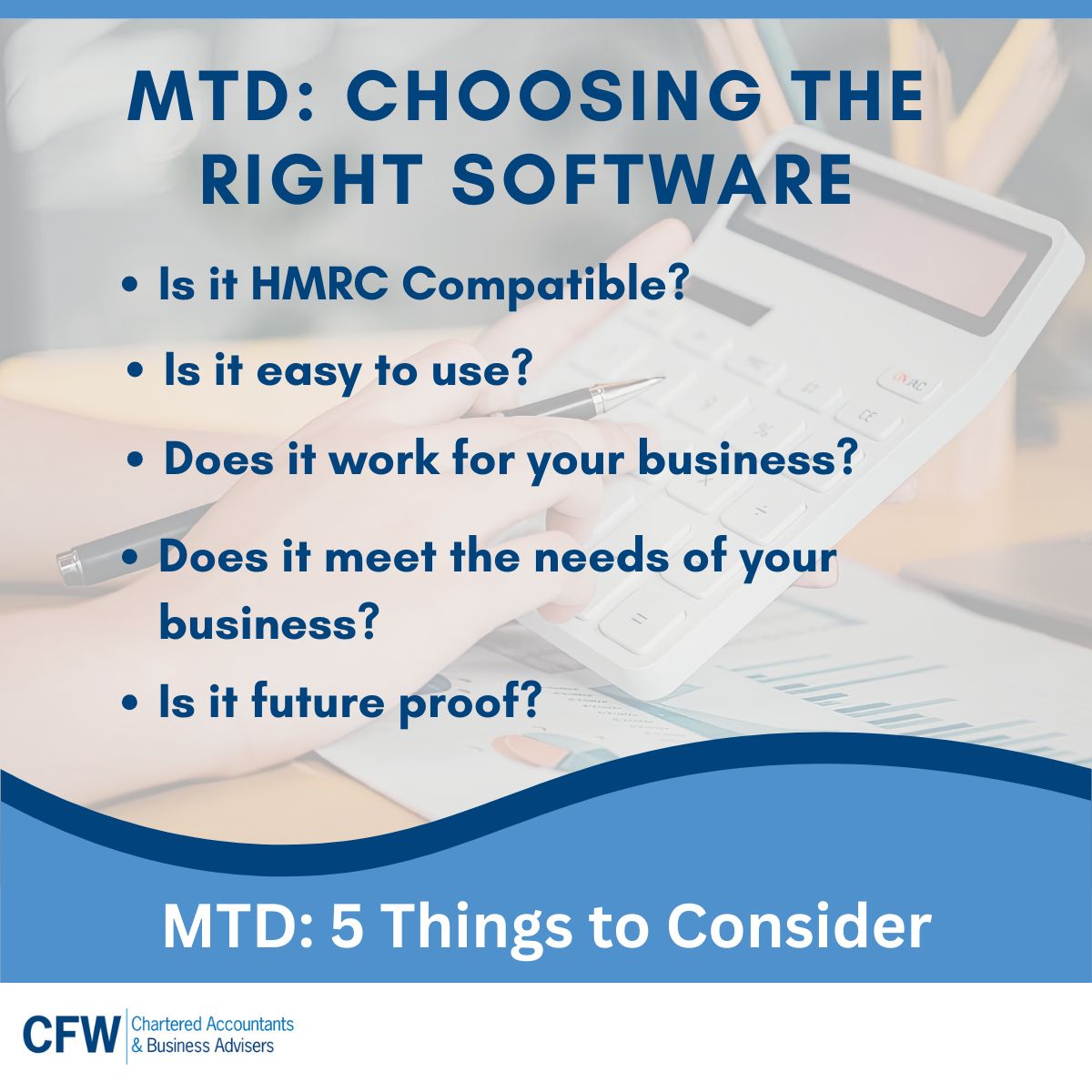
Emerson John, our Innovation and Development Manager sets out 5 keys areas to consider when choosing software for MTD:-
1. HMRC compatibility
First and foremost your software must be recognised by HMRC. This ensures it can connect to the HMRC portal, store digital records and be able to submit quarterly updates to HMRC
2. Ease of use
You’ll be using the software on a regular basis so you should find the user interface intuitive and easy to use, so it fits your level of confidence and doesn’t add unnecessary stress. If your needs are straightforward the software should be simple, if they are more complex the software will mirror this to match the requirements.
3. Integration with your processes
Think about how the software will interact with your current way of working, as the best solution should improve efficiency without forcing you to completely rebuild your financial processes. For example digital links to your bank can help speed up your transaction recording process whilst removing the risk of errors or missing transactional data.
4. Functionality for your needs
Not all businesses are the same so considering the key functions required is key, its easy to prioritise price over functionality. If you need to report multiple income streams, segregate sites or even particular projects you should check if the software has this functionality. When it comes to landlords ownership of properties can be quite varied so again this should be considered when choosing the software that detailed percentage splits can be entered along with reporting these to HMRC for each owner under the same licence.
5. Scalability and support
When selecting MTD software, it is important to think beyond your immediate compliance needs. You should choose a software that has the scope to evolve with your business and its future plans. Is the software scalable and can it be upgraded without costly migration. Does the software provider offer support and is the guidance helpful, looking over the support pages and product development can be an indication to assist in this.
There is an app for everything! A well-used cliché but also a truth, and never more when it comes to accounting software. There are providers a-plenty: Xero, Sage, QuickBooks, Freeagent and ClearBooks. Even banks are getting on board, providing dedicated tools to analyse bank transactions for business purposes. In fact, HMRC’s Making Tax Digital compliance software list has over 400 software apps available from a large number of suppliers.
Millions of households are facing a rise in energy costs, alongside increases in the cost of council tax, water bills and other utilities and there is a warning of fresh energy bill price rises in October. Energy prices have been affected by the Ukraine war and pressure on suppliers. There are continuing delays and shortages on a wide range of goods businesses need to function properly.


